
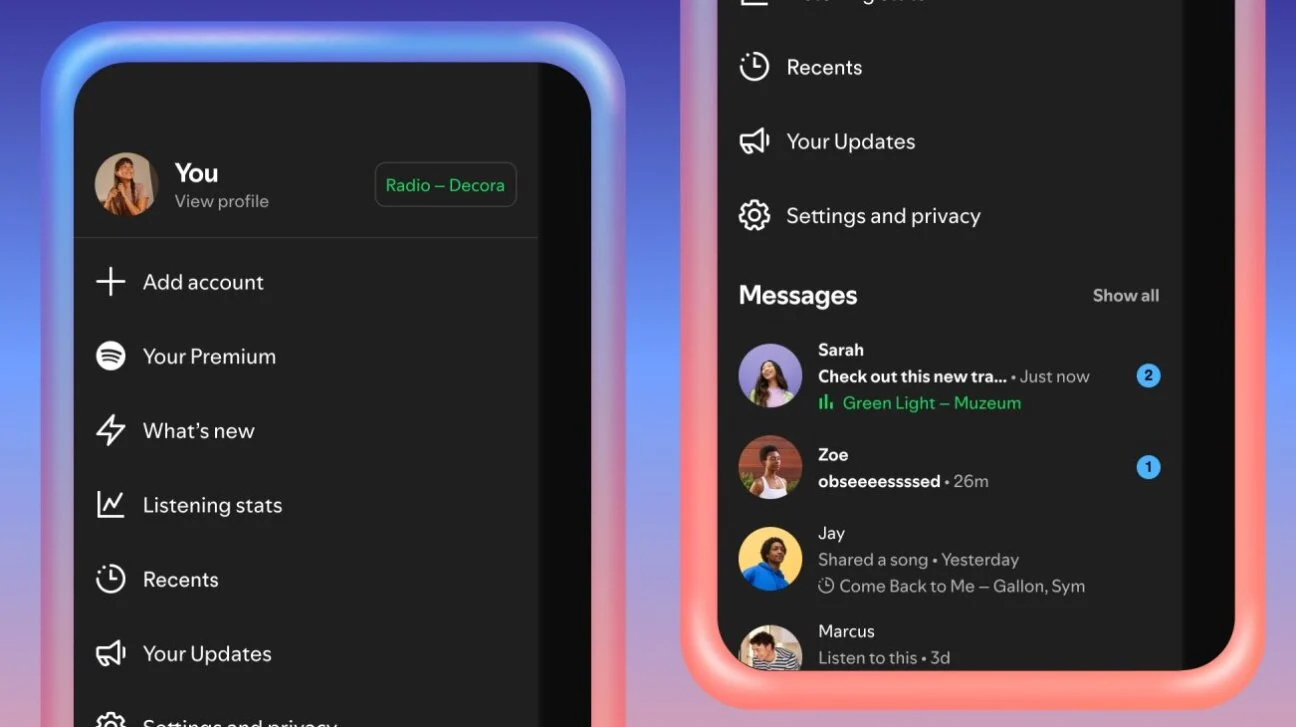
Spotify is expanding its in-app messaging feature, allowing users to see what friends are listening to in real-time and join shared listening sessions.
The streaming platform first introduced direct messaging in August 2025 to make sharing music and other content easier. Since then, nearly 40 million users have sent around 340 million messages.
The new Listening Activity feature is opt-in and shows what music a user is currently playing to their contacts on Spotify Messages. If no song is playing, the user’s recently played tracks appear instead. Friends can tap a track to add it to their library, start playback, or react with emojis. Users control who can see their activity and can turn it off at any time through privacy settings.
“Listening activity is only shared with people you’ve already messaged on Spotify, and you’re always in control, only the contacts you choose can see your activity, and you can turn it off at any time,” Spotify said.
Spotify also introduced Request to Jam, which lets users invite friends into live listening sessions directly from message threads. The feature builds on Spotify’s Jam tool, launched in September 2023, which allows up to 32 users to collaboratively build a playlist in real-time. Request to Jam shows when friends are already listening and lets users message in sync while enjoying music together. Daily active users of Jam have more than doubled year over year, according to Spotify.
Both features are rolling out to iOS and Android users in Messages-enabled markets and will be widely available by early February. Listening Activity is available to all users with Messages access, while Request to Jam requires at least one Premium subscriber.
Spotify has been adding features in recent months to improve user experience, including Prompted Playlist, which generates playlists from text prompts, and integration with TuneMyMusic to transfer playlists from other streaming services. In November, Spotify also expanded song credits to include all contributors, such as background vocalists, musicians, and engineers, giving listeners more insight into how each track is created.