
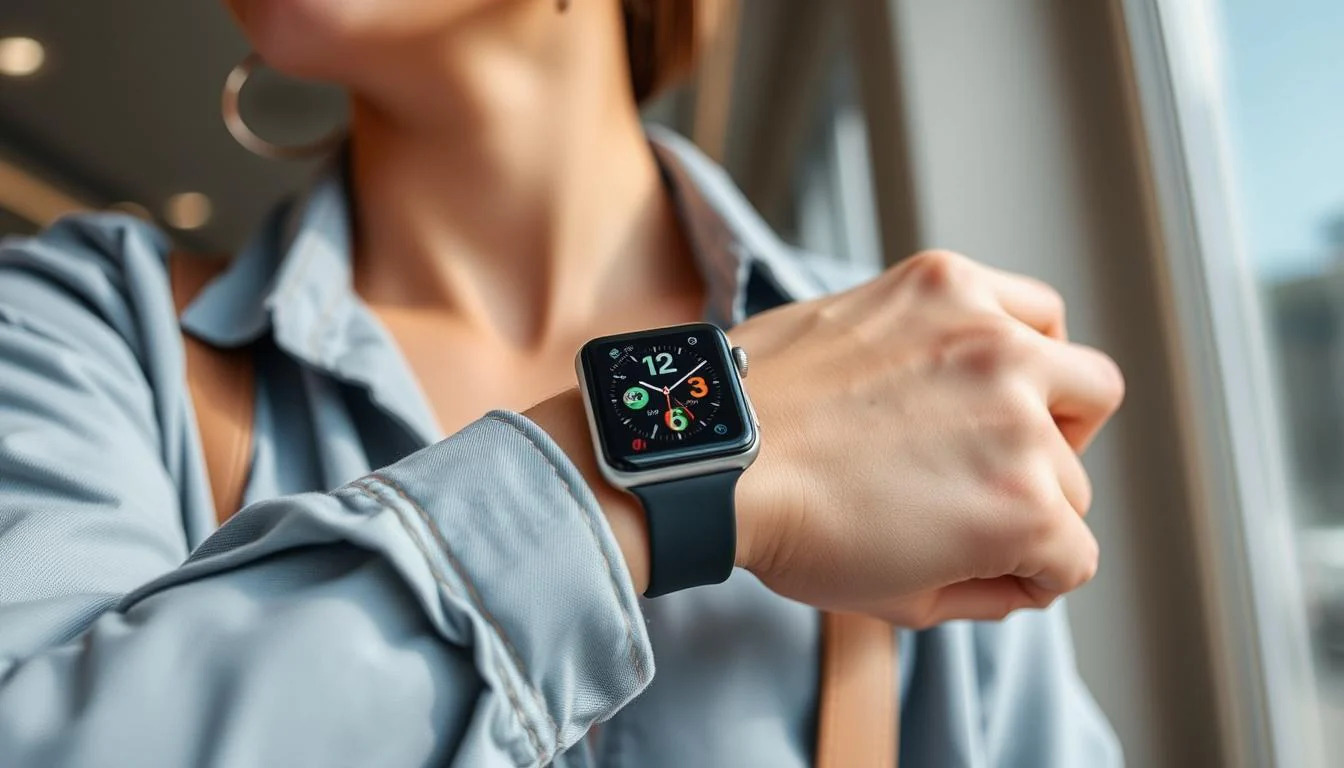
The Apple Watch is widely recognized for handling calls, texts and notifications, but its most powerful impact lies in health support. To understand how advanced these tools have become, Dr. Lauren Cheung of Apple broke down the science behind nine lesser-known features. These tools work together to help users of all ages track their bodies, understand changes and make informed decisions about their wellbeing.
Vitals App: Understanding Daily Shifts in Your Body
The Vitals app combines multiple overnight metrics; including heart rate, wrist temperature, oxygen saturation and respiratory rate, to provide a clear picture of how your body is functioning.
If two or more readings move outside your typical baseline, the watch sends a notification with explanations such as possible illness, stress, travel, alcohol consumption or disrupted sleep.
After one week of consistent wear, the watch establishes personalized baseline ranges and begins offering daily insights. This makes the Vitals app especially helpful for spotting early signs of sickness or tracking recovery trends over time.
Noise Notifications: Long-Term Hearing Protection
Noise notifications monitor the ambient sound intensity around you. When levels reach those classified as potentially damaging, the Apple Watch alerts you so you can limit exposure.
Pairing this with AirPods Pro’s Hearing Test and hearing support tools gives users a more complete understanding of their overall sound environment; from crowded cities to loud workplaces to concerts.
These tools support long-term hearing health by helping users identify harmful patterns they may not otherwise notice.
Cycle Tracking & Ovulation Estimates: Temperature-Supported Accuracy
On Apple Watch Series 8, Ultra and newer models, temperature-sensing technology enhances reproductive health tracking. The watch records nightly wrist temperature changes, which naturally rise after ovulation.
By identifying these subtle shifts, the Cycle Tracking app improves period predictions and offers retrospective ovulation estimates.
This feature requires users to wear the watch during sleep and complete setup through the Health app. While not a fertility device, it provides meaningful context for individuals tracking cycles, planning pregnancies or monitoring irregularities.
Fall Detection: Automated Emergency Response
Fall Detection remains one of the most impactful lifesaving tools on the Apple Watch. When the device detects a hard fall either during daily activities, workouts or accidents; it immediately displays an alert, taps the wrist and gives the user the option to call emergency services.
If there’s no movement or response for roughly 60 seconds, the watch automatically calls emergency services and sends a message with location to emergency contacts.
This feature is especially important for older adults, people with medical conditions, and anyone who lives alone.
Heart Health Monitoring & ECG: Early Detection for Heart Concerns
Apple Watch monitors the heart continuously in the background. If the user’s heart rate becomes unusually high, unusually low or shows signs of irregular rhythm consistent with atrial fibrillation, the watch sends a notification.
For deeper insight, the ECG app; available starting with Series 4, enables users to take a 30-second electrocardiogram from their wrist. The reading can be exported as a PDF and shared directly with a healthcare provider.
These tools support early detection and awareness, particularly for users with family histories of heart conditions.
Time in Daylight: Tracking Natural Light for Mood and Eye Health
Time in Daylight uses an ambient light sensor to estimate how long a user spends outdoors. Research links daily natural light exposure to improved mood, better sleep cycles, vitamin D intake, and healthier habits.
Apple also highlights its importance for children’s eye development. Outdoor light exposure is associated with reduced risk of myopia, and experts recommend 80 to 120 minutes outside per day.
The feature helps both adults and families understand their daily light habits and make targeted lifestyle adjustments.
Mindfulness & State of Mind: Emotional and Mental Health Awareness
The Mindfulness app includes a State of Mind feature that allows users to log daily emotions, momentary feelings and overall mood.
Over time, this information reveals patterns tied to sleep quality, physical activity, work schedules and stress levels.
Charts in the Health app help users better understand triggers or positive habits, offering data-backed insights that may support conversations with mental health professionals.
Sleep Apnea Notifications: Detecting Patterns Over a Month
Available on Series 9 and Ultra 2 models, sleep apnea notifications analyze a full month of breathing data collected during sleep. If the watch detects consistent disruptions in airflow or elevated breathing irregularities, it notifies the user.
It also generates a detailed PDF summarizing findings, which can be shared with a doctor.
This feature is intended for adults who have not been diagnosed but may want to bring early observations to a healthcare provider for further evaluation.
Handwashing Detection: Reinforcing Healthy Hygiene
Handwashing detection uses motion sensing, audio cues and on-device machine learning to recognize when a user begins washing their hands.
A 20-second timer appears on the screen, encouraging proper technique based on public health guidelines.
The watch can also detect when a user returns home and remind them to wash their hands; a feature introduced during the pandemic and still useful today for general health.
A Growing Health Ecosystem on the Wrist
Collectively, these features demonstrate how Apple continues to transform the Apple Watch into a robust daily health companion. While it cannot replace professional medical care, it provides accessible, meaningful data that helps users understand their bodies and take proactive steps toward healthier living.